Showing posts with label amari spievey. Show all posts

Old Mother Hubbard: The Safeties

>> 2.28.2012
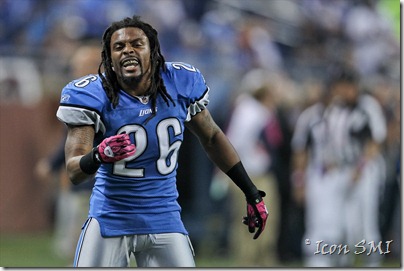
louis_delmas_detroit_lionsWe round up the defense with the last line of defense: the safeties. Though the cornerbacks took the brunt of public criticism in the last two games, many of the high-profile failures of the secondary in 2012 were actually the fault of the safeties. With Louis Delmas at full speed, Amari Spievey growing into his newfound role, and veteran Erik Coleman coming on board as an insurance policy for both spots, this wasn’t supposed to happen. So what happened?

First, let's look at what 2010's Safety Old Mother Hubbard had to say:

Louis Delmas is an athletic, hard-hitting safety who can make big plays against the run and the pass. Despite being limited by injury, he proved extremely effective on the blitz this year. If he can go full speed, he should be one of the best safeties in the NFL next season.

Amari Spievey is a talented, hardworking kid with the raw ability to be a very good safety. He struggled with consistency and mental mistakes in his first season, and this offseason will be crucial in finding out if he’s a long-term starter or medium-term rotational player.

Chart?

Chart.

Detroit Lions safeties 2011 grades, with Pro Football Focus and Advanced NFL Stats

The best safety in the NFL this year was Troy Polamalu, with an outstanding +19.2  PFF overall grade. He was the NFL’s best blitzing safety, 4th-best in coverage, and 3rd against the run. His 3 penalties called on 930 snaps dinged him just a little. He was 2nd-best in +WPA with a walloping +1.90, meaning he made a huge impact on the Steelers’ chances to win, and his 3rd-best 50.5 +EPA shows he was constantly making positive plays.

On the other side of the PFF ledger, the worst-graded safety in football was Minnesota’s Jamarca Sanford. The polar opposite of Polamalu, Sanford was strongly negative in pass rush, coverage, and run-stopping (but got a small boost from only being flagged once). His –18.2 overall grade was powered mainly by a –15.2 coverage mark, also worst in the biz.

Now here's where things get interesting: Sanford had a 32.2 +EPA and 0.77 +WPA, which were the 23rd- and 36th-best figures in the NFL, respectively. This means Sanford was generating enough positive production to rate as a decent starting safety, but his coverage gaffes were so repeated and pronounced that PFF graded him the worst safety to crack an NFL rotation!

Disclaimer?

Disclaimer.

Pro Football Focus grades are based on TV footage, and while I believe completely in what they do over there, downfield pass coverage grades are the area where they have the hardest time figuring out what’s going on. Without knowing each player’s assignment, and most of the secondary being offscreen at the snap, PFF safety grades have limitations.

Advanced NFL Stats' +EPA measures the expected points added by a player’s positive plays, but cannot measure failures. Cornerbacks are the position where “lack of failure” is arguably more important than positive playmaking, so again—there are real limitations here. Same applies to +WPA: a timely interception can swing the likelihood of winning around very quickly, but a surrendered touchdown can too—and that won’t show up in +WPA.

To sum up: PFF grades and ANS metrics are never going to be more variant and contradictory than when assessing cornerbacks (and safeties are a close second). However, this increases the value of both sets of data. Though we’re going to have to fill in the gaps ourselves, it’s better to know reality lies in the gap than unwittingly treating one number as gospel.

The top-graded Detroit Lions safety was Louis Delmas. Delmas, most Lions fans probably have a vague sense of, was not the playmaker he was in 2009, despite being fully recovered from his groin injury of 2010. In coverage, that’s a good thing: safeties are typically only noticed in coverage when there’s a problem. Pro Football Focus backs this notion up: Delmas was +4.7 in coverage, 10th-best amongst 87 qualifying NFL safeties.

Overall, Delmas's -2.0 grade was slightly above the normalized NFL average of -2.8. But was he really that bad? Drilling down into his grades, we see mostly positives and neutrals and one big nasty red mark: a brutal –5.3 against San Francisco. Most of that was 3 missed tackles against the run, but some of it was allowing three first downs through the air on three “Thrown At”s.

So except for Week 6, and the last 5 games of the regular season (out with an MCL injury, and 'scope to repair it) Louis Delmas, veteran safety, was back there doing his job.

We missed “Da Missile.”

If we in his horrific wild card performance (-6.5, clearly not ready to play), Delmas graded strongly negative against the run in five games, and strongly positive only once. In 2010 and 2009 those ratios were 4:3 and 3:4, respectively. On the flip side, Delmas’s 2011 coverage grades had 2 negatives and 2 positives, an improvement from 4:1 and 3:2.

Statistically, Delmas did very well, allowing just 15 of the 28 balls thrown his way to be caught. He also held completions to an average of just 9.7 yards each, 7th-best in the NFL. He had no interceptions, and just four passes defensed, but also allowed just one touchdown and a 25th-best opponent passer rating of 80.4 (NFL avg.: 90.7).

While Delmas's pass coverage is very good and getting more consistent, his run-stuffing is getting worse. He had 46 solo tackles, 1 assist, and 18 defensive stops. But he missed 12 tackles, 1 per every 3.88 tackles made (seventh-worst in the NFL, well below average of 8.6). In fact, using my metric of “missed tackles per tackles made” (solos plus one-half assists), Lions safeties ranked 64th (Spievey), 80th (Delmas), and 85th (Harris) out of 86.

It’s possible, then, that this is schematic. Relying on the back seven to gang-tackle players the line has allowed through is bound to make it much tougher on the safeties. However, I’ve seen Louis Delmas singlehandedly drop Steven Jackson in the open field with a full head of steam. He’s a better tackler than that.

+EPA agrees with me. Delmas's 19.3 total is low, you'd think because he only played in 12 games. But he was ranked 52nd of 123 in total +EPA, and 50th in +EPA/game with 1.61. His plus-play production was mediocre at best. His +WPA is right in line with his +EPA (and the NFL average) at 0.52. In terms of playmaking, Delmas was at what baseball people call "replacement level;" you can get a safety like that anywhere.

So what now? Last year, I said if Delmas “can go full speed,” he should be “one of the best safeties in the NFL.” Instead he was good in coverage, poor against the run, and mostly invisible when counting the kind of splash plays that used to be his calling card.

Bottom Line: Delmas’s career is at a crossroads. Will he bloom into the all-around badass he looked like as a rookie? Or will he remain a good coverage safety who needs help from a partner? There’s no doubt he has the physical tools and the mental tenacity to be an elite, playmaking safety but something’s missing and I don’t know what.

Chris Harris was an odd, but valuable midseason addition. After the Lions picked apart Chris Harris and the Chicago Bears on Monday Night Football, Harris was released—and the Lions picked him up. Harris’ –7.3 overall PFF grade was below the NFL average of –2.8, tied for 65th out of 86.  Harris was solid against the run; his +0.3 run-stopping grade was just above the NFL average of –0.3. He also kept his nose clean: no penalties called despite a 400-snap workload.

Unfortunately, Harris was just as susceptible to the pass in Detroit as he was in Chicago. He turned in five strongly negative coverage grades out of ten games played; none positive. In fact, he only had one positive mark all season long: a +1.3 against the run in Week 17 at Green Bay—yes, The Game Where They Passed For A Thousand Yards. His +EPA and +WPA were meager, even considering his reduced workload.

I don't mean to be overly harsh on Harris; switching schemes midseason only to be pressed into a starter's workload must be extremely difficult. His Pro Football Focus data for 2008, 2009, and 2010 reveals an average all-around NFL starter; he just had a profoundly down year. The 29-year-old Harris will have to earn 2012 playing time in camp, whether that's in Detroit or elsewhere.

Bottom Line: Chris Harris did about as well as you could ask of a guy who got cut midseason, picked up by another team, and pressed into starting the last five games of a playoff race: not very well. May return as the rotational third safety next season.

And now? The man, the myth, the enigma: Amari Spievey.

Drafted in 2010 to “fill a hole” at cornerback, Spievey’s odd-duck skill set and lack of conditioning got him an immediate switch to safety—and trip to the doghouse. Still, Spievey flashed brilliance in 2010. His physicality made the switch intact, and his not-quite-good-enough-for-cornerback hips still channeled impressive recovery speed.

Of course, he needed that speed as he struggled to keep his head above water last season, and this season was no different. His –11.5 overall grade was partly informed by his –2.2 blitz grade and –3.2 coverage marks, but was his brutal –7.5 against the run that dragged his PFF grade into the murky depths.

Technically, Spievey got better as the season went along; his two positively-graded games came in Weeks 14 and 16, at home against the Vikings and Chargers. But his Wild Card performance was a brutal -4.6, and the rest of his 2011 chart is dripping red as well.

Spievey’s 1:3 TD-allowed-to-INT ratio helped lower his opponent passer rating to a team-best (NFL 13th-best) 63.4. However, his 62.5% completion percentage and 14.6 YpR shows he was a lot easier to beat through the air then Delmas. On the ground, Spievey was the surest-tackling safety the Lions had, missing one for every 4.96 solos+half-assists. Unfortunately, that’s still 64th-worst in the NFL, and significantly worse than the NFL average of 8.6. As I said, scheme may play a part here, but . . .

Spievey's three picks gave him the best +EPA of any Lion at 22.9; that's not great. However, of that meager production he wrung +0.65 +WPA, slightly above-average and the best the Lions had to offer.

Bottom Line: Spievey is no less an enigma than when the season started, but the flashes of brilliance remained flashes and the prolonged stretches of awful remained awful. Like Delmas, his performance in 2012 will decide his long-term future.

SHOPPING LIST: A common theme is developing: “The Lions have some decisions to make” about the safeties. Delmas returns as the starting free safety—but is he a game-changing foundational piece, or a solid role player? Harris supplanted Coleman as the third safety, but will he return? Spievey will have a chance to earn that spot next to Delmas—but the Lions NEED better production than what he’s been able to provide; the safety play in 2011 was unacceptably poor

A veteran upgrade over Spievey, or a talented rookie to compete with him, are a must if the Lions are to shore up the secondary that was so thoroughly exposed at the end of 2011.

Read more...

Old Mother Hubbard: The Safeties

>> 3.29.2011

Throughout the OMH series I’ve been waiting to get to this one; I’ve got a really cool data visualization thing I wanna do with each complete unit. So, the safeties:

image

The top-graded safety is Philadelphia’s Quintin Mikell, who absolutely murdered the coverage and run-stopping grades. Despite below-average blitzing, and being called for four flags, Mikell’s performance still made him the highest-graded safety, by far. In fact, only four safeties cracked positive double digits. 50 of the 85 safeties were within +5.0 and –5.0 . . . just as with OLBs, though, I wonder if this is a manifestation of the way PFF grades, or if it reveals something innate about the game of football. Safeties are very difficult to grade from TV broadcast footage—but perhaps the safeties simply don’t impact the game as often as other positions?

There’s no question who the Lions—and their fans—view as their top safety, or even top defensive back. Louis Delmas was a player who exploded onto the scene out of Western Michigan in 2009—and while we knew he gambled a bit, and missed almost as often as he hit, he made some flat-out incredible plays his rookie year. I think, though, most of us had a sense throughout this year that while he wasn’t making obvious mistakes, he wasn’t making many highlight-reel plays either.  He seemed to be toned down, the edge taken off. Was that maturation, or regression?

Delmas took 940 snaps, and his overall grade matched the NFL average to within three tenths of a point. He was a full notch below average in coverage (-3.9), but a shade above average in run defense. However, he was an impressive +4 in pass rush; the fifth-best blitzer in the NFL! These numbers, however, reveal an overall regression from 2009, when Delmas played almost exactly the same number of snaps, and was a bit above-average in every dimension.

Last August, I wrote a piece called “Something’s Rotten in Delmas,” a slightly over-the-top look at the rumors about Delmas’s injured groin. Pro Football Talk had sources telling them Delmas might be lost for the year, while every Detroit scribe’s sources were pounding the table in denial. The truth, I guessed, was somewhere in between:

The Lions and Delmas are absolutely right to be cautious with the injury. Further, if the specialist Delmas saw didn’t recommend surgery as a first course of action, then why do it unnecessarily? But this is clearly more serious than “a short-term thing.” I don’t believe that limited practice reps are going to seriously harm Delmas’s play in 2010—but if going full-speed sporadically isn’t “restful” enough for the groin to completely heal before the season starts, Delmas may not be able to go at full speed all year.

For the first nine weeks of the year, Delmas appeared to be his usual self: except for a –0.8 against Philly (entirely due to a –1.6 coverage grade, likely a single mistake) he was graded neutral or positive in every single game. Then, after a very nice +2.6 against the Jets, something happened. He went six straight weeks without a positive grade, including three awful ones against the Cowboys, Pats, and Bucs (-1.9, –3.8, and -2.9 respectively). He missed week 16 with a concussion, then turned in a great final game; earning an impressive +2.7 run defense grade against AD and the Vikes.

I can only speculate [Ed. Note: SPECULATE] that Delmas aggravated the groin injury, or suffered some other malady, in between his great performance against the Jets, and his weakly negative one against the Bills. Seriously, he turned in a +1.9 coverage grade against Braylon Edwards and Santonio Holmes, but –1.2 against Steve Johnson and Lee Evans? Delmas had groin surgery immediately after the season, which jibes perfectly with my theory. If Delmas is taking the time to fully recover, he should be full-speed for 2011—and back to being “Da Missile” we saw in 2009, two and a half years wiser.

Bottom Line: Louis Delmas is an athletic, hard-hitting safety who can make big plays against the run and the pass. Despite being limited by injury, he proved extremely effective on the blitz this year. If he can go full speed, he should be one of the best safeties in the NFL next season.

The good news, and bad news, is that Amari Spievey was the Lions’ top-graded safety in 2010. The third-round draft pick, who we’d hoped would step in and start at cornerback, instead struggled and switched to safety. Learning the new position slowed him down some more, but he saw spot duty in weeks 3, 5, 6, and 8. Finally, he got his first full workload against the Jets, and he played the game of his career to date: a +3.3 overall graded, 7-tackle performance. He was average or better in every category, and a very strong +2.9 against the run.

Unfortunately, Spievey hit a rough patch immediately after: three straight negative games against Buffalo, Dallas, and New England, struggling against the run and the pass. Then, he tightened it up against Chicago, Green Bay, and Miami; his grades in every dimension (and therefore overall) were flatly average. He finished off the season with a very strong +2.6, boosted by his only positive coverage grade of the year, a +1.9.

Looking at the stats, Spievey's a sure tackler. I added tackles and assists, and divided by missed tackles, and Spievey's rate of 7 tackles per miss is below the league average of 8.2. I am a ding-dong. I interpreted this stat exactly backwards. Spievey missed tackles a little more frequently than average. Thanks to commenter Laimbrane for spotting this! Interestingly, both Spievey and Delmas were thrown at a little less than the NFL average safety—but Spievey allowed a worse (better) passer rating, 82.5 to Delmas’s 89.2. Again, Spievey was just better than the NFL average of 85.7.

Seeing a pattern? The PFF stats paint a slightly rosier picture of Spievey’s coverage than the grades do—and while normally I’d trust the grades more, safety play is very difficult to grade from TV footage. Overall, it’s safe to say Spievey played just below average in coverage, and a bit above average against the run, and on the blitz. He definitely had trouble focusing, and gave up some big plays, but showed the resiliency to shake it off and minimize his mistakes.

Bottom Line: Spievey is a talented, hardworking kid with the raw ability to be a very good safety. He struggled with consistency and mental mistakes in his first season, and this offseason will be crucial in finding out if he’s a long-term starter or medium-term rotational player.

As for the rest?  Well, C.C. Brown is not likely to return. Interestingly, C.C. covered okay enough but was a disaster against the run. He graded out at –6.5 and missed 10 tackles to just 32 made. UDFA Randy Philips flashed some promise in camp, but “spit the bit” as Tom Kowalski likes to say. He didn’t do well with a heavier preseason workload, and moved up and down off the practice squad. He got only 13 reps of live action. Paul Pratt got just one rep at safety; I believe they see him as a corner. John Wendling got 59 reps, but is clearly a special teams specialist. Erik Coleman was signed as a street free agent after being released from Atlanta.

SHOPPING LIST: The Lions are set at one safety position with Louis Delmas, who played admirably despite fighting through injuries. Amari Spievey showed enough promise to be considered a future starter, but will have to fight off FA signee Erik Coleman. Coleman has limitations, but will be a nice veteran insurance policy for both young safeties. Wendling and Philips will likely fight it out for the fourth safety spot. If the Lions want to make this a position of emphasis, they could acquire a clear-cut upgrade over Spievey, but my guess is they think they’re set here.

Read more...

Meet the Cubs: Amari Spievey Scouting Report

>> 5.21.2010

3.2, 66: Amari Spievey, Iowa CB:

01 JAN 2009:  Amari Spievey of the Hawkeyes warming up before the Outback Bowl with the University of South Carolina playing against the University of Iowa at Raymond James Stadium in Tampa, Florida.  It’s not a secret: coming into the draft, the Lions needed cornerback help.  Of course, the Lions always need cornerback help, but the Lions really needed cornerback help.  At the top of the third round, the pickings were slim.  The Jets’ surprise selection of Boise State CB Kyle Wilson kicked off a run on cornerbacks: four went in just seven picks. 
With two more corners coming off the board before the Lions got back on the clock, all of the “first- or second-round” corners were gone; there was no slider, no steal, no early Christmas present sitting there for the Lions.  One such guy I thought might fall, Chris Cook, actually went with the 34th pick of the second round.

Unfortunately, the next tier of man-to-man cover cornerback prospects, like Akwasi Owusu-Ansah and Trevard Lindley, were definite fourth-rounders.  Until Michael Schottey started putting Amari Spievey’s name out there on the Mlive.com live chat, he wasn’t even on my radar.

Amari wasn’t really on the major recruiting sites’ radar, either.  Coming out of Middletown, CT, as Xavier High School’s all-time leading rusher, Spievey was rated a two-star corner by Rivals, and a two-star cornerback/runningback by Scout. He had 3,606 yards and 50 TDs, along with 87 tackles and 16 INTs.  In 2005, he was named the Connecticut Player of the Year, while leading Xavier to the Class LL state championship.

Despite the tepid grades from the big recruiting sites, Spievey boasted a small, but impressive offer list: Iowa, Wisconsin, and Rutgers.  Spievey chose Iowa partially because they showed lots of early interest:

"The offensive coordinator at Iowa is from Connecticut and my school is actually his school's rival and I used to run all over them. I kind of caught his eye and they had been recruiting me since I was a freshman."

Once at Iowa, Spievey didn’t have a seamless transition.  He was redshirted his freshman year, and had difficulty maintaining motivation.  Through a combination of being switched to defense (he’d played runningback his whole life), being so far from home (he’s very close to his mother), and having a staph infection (ow), Spievey lost his way.  He wasn’t mixed up in the party scene; he’d just lost confidence and direction both on the field, and in the classroom.  Spievey got the wake-up call he needed, according to Nick Cotsonika, by being dismissed from the team:

"When I got dismissed, that kind of just shook me up and just woke me up, like, 'Man, you better take advantage of this opportunity that you have here,' " Spievey said. "I knew that if I had a chance to come back that it would be my last chance. After that, I would be out of football. I made sure I wasn't going to mess it up."

That's exactly what Spievey did.  In 2007, he had seven INTs, 242 INT return yards, two INT return TDs, returned two kickoffs for TDs, boasted a 39-yard kickoff return average, and blocked four punts.  His The Iowa Central Community College Tritons went 9-2 en route to being ranked 7th in the nation, and Spievey was named NCJAA 1st-team All-American.  He also pulled his GPA up, netting a 3.0 and 2.7 in his two semesters there.

Welcomed back to Iowa University—and the Hawkeye squad—with open arms, Spievey embraced the challenges of big-time college football.  Amari opened his junior year as the starting right cornerback, and closed it on the All-Big Ten team (coaches’ second-team, media’s honorable mention).  He finished third on Iowa in tackles, with 68 (43 solo); he had four INTs and six passes defensed.  He was also named to CollegeFootballNews.com’s Sophomore All-American second team.  Iowa defensive coordinator Norm Parker on Spievey’s turnaround:

"When he came back, he came back with a different attitude," Norm Parker said. "He was much more into studying film and that kind of stuff, the stuff you have to do to prepare to play a game, than he was before he left. All of a sudden, he believed a lot more of what you said than he did in his first go-around. He just wasn't mature. I think it helped him mature."

His senior season, Spievey had two things he'd never had before: respect, and expectations.  Named to the preseason Jim Thorpe award watch list, and a bevy of preseason all-Big Ten teams, Spievey was expected to be an impact player on defense, and that he was: starting every game, he was second on the team in solo tackles, with 42, 2 interceptions and eight passes defensed. 

The postseason awards followed.  He was named All-Big Ten again, this time to the first time by the Big Ten coaches, as well as The Sporting News and Phil Steele’s own first-team All-Big Ten lists.  He was also named to College Football Insider’s All-America third team, and Pro Football Weekly’s honorable mention All-America team. 

Spievey decided to forego his senior year.  Between his redshirt year, his juco detour, and leaving early, he’s actually right on schedule: He had four years of school, and just turned 22 years old.  With his physical maturity, the accolades he’d received, and the limitations of Iowa’s system, he had little left to prove.

An interesting sidenote: Spievey was an art major.  Yes, that’s right, an art major.  I have the privilege of being the son of an art major, and I knew a couple of art majors in college . . . none of them were big-time college football players.  Spievey told Scout.com why:

“My whole family is good at drawing. I've been drawing since I was little. My brother was always drawing, so I've been watching him for years and found that I had the ability to draw, too. And I found that it's something I love to do. Whenever I have free time I pull out some paper and a pencil and just draw whatever I see, whatever's on my mind. I talked to Coach Ferentz and he said, "while you're here you might as well do something you love to do" and I love to draw, so I decided to be an Art major.”

So.  This is the part where I run down his profile as a prospect, but I’m going to sideline for a bit.  Adam Jacobi of the excellent Iowa blog, Black Heart Gold Pants put together an Amari Spievey Owner’s Guide, and it is a definitive reference.  Getting away from all the “stiff hips,” “thick lower body,” and “has the high, tight bubble you look for” stuff, Jacobi gives us the in-game bottom line on what Spievey does on the field:

Will Spievey be awesome? It depends on where he goes. At Iowa, he was the most special cornerback we've ever watched. He got torched once against Illinois in '08 and once against Penn State in '09. Those happened and you're free to read as much as you please into those plays, but also consider that they're the only two times that he got torched. It's not as if he's just plain too slow. On, say, the Ravens, he'd fit in beautifully.

Again, read it: Black Heart Gold Pants's Amari Spievey Owner’s Guide.

Okay, so: really special player, really hardnosed tackler, great instincts, very physical, good athlete, but possibly lacking in the blazing/gambling/one-on-one fly route erasing department.  Also, a suggestion that he could be a standout in a defense which runs a defense where the corners press with safety help up top, such as the Tampa 2.

Cue the wailing, lamentations, and gnashing of teeth from Lions fans everywhere.

Let’s hear what all those scouty types have to say, anyway:

First, Spievey's NFL.com combine profile page:

Spievey is a two year starter for the Hawkeyes after transferring from Iowa Central Community college. He has a good combination of size and athleticism for the position. Spievey doesn’t have great power and pop as a run support defender but gives consistent effort and is solid in the open field. Spievey is just average as a reactor to route progressions and has some work to do in this phase of his game. He does have a good feel for leverage in the running game and is quick to squeeze running lanes from the perimeter. Spievey shows good hands with the ball in the air and is aggressive to make a play in traffic. Spievey is a good football player that has a higher ceiling than many prospects but may take some time to work into a starting role.

CBSsports.com's NFL Draft Scout breakdown of Spievey:

Man Coverage: Usually played off in Iowa's defensive scheme and was able to transition to face receivers and stay on their hip down the sideline. Could be an effective press corner, but needs to get his hands on the receiver more consistently. Strong enough to ride his man out of bounds if getting the jam. Loses track of his man when turning to look for the ball downfield. Plays tall, has a high, choppy backpedal and only average lateral movement. Allows receivers to eat up cushion too quickly.

The National Football Post’s scouting report on Spievey, via Rivals.com:

He's a technically sound corner who showcases good footwork in his drop, does a nice job keeping his feet under him and wastes little motion when asked to click and close on the ball. He displays a good feel in coverage and looks natural when asked to read and react in zone coverage and close on the football . . . the biggest knock on Spievey is his lack of a second gear when asked to turn and run downfield. He demonstrates above-average fluidity when asked to transition out of his drop but struggles to get back up to speed quickly and seems to get too upright when asked to run vertically downfield . . . Overall, he's a tough corner who can tackle, press and find the ball in both off-man and zone coverage but will struggle when asked to turn and run with speed downfield.

SI.com grades Spievey as a 2.65; a "future starter".

Analysis: Spievey has been a terrific player at Iowa the past two seasons and has the skills necessary to develop into a second cornerback on the NFL level. He's a top-100 pick who should see action in nickel packages as a rookie in the NFL as he completes his game.

As always, there's a lot of contradiction here: Spievey either has "good feel or "isn't instinctual", either "wastes little motion" or "is inefficient", either "doesn't have great power and pop" or is the best tackling corner ever.  However, there is a consensus picture: he's really, really good until he has to turn and chase—but if he can improve that dimension of his game, he’s a complete player with high upside.

It's difficult to say what "scheme" the "Lions run" when it comes to the secondary, since between injuries and lack of talent, the Lions were pushed up to, and beyond, the breaking point.  They 2009 in all-hands-on-deck panic mode against Drew Brees and the Saints, and then lost Ko Simpson, Eric King, Jack Williams . . . the starters were terrible, and they were losing their injury replacements to injury.

It’s reasonable to assume that given healthy, quality defensive personnel, the Lions would use more man-to-man, to allow their safeties to be more aggressive blitz.  Then again, it’s reasonable to assume that the Lions will be deploying their safeties in 2-deep umbrellas, as Gunther turns up the wick on OLB pass rushing.

Either way, the Lions like their defensive players to be multidimensional; no player should limit what the defense can do.  They’ll expect him to learn what he doesn’t know, and improve where he’s lacking.  The stuff they care most about: smart, big, tough, physical, aggressive, but doesn’t make the big mistakes—and learns from them when he does, that stuff’s all there.

The comparison Lions fans leap to is nasty, physical Tennessee CB Cortland Finnegan; I hesitate to compare any third-round rookie to a perennial Pro Bowler.  But Finnegan needed a few years to develop his game, and if we give Spievey enough time, he may get there as well.  Of course, why bother waiting and seeing when we can know right now?

We consult the most authoritative oracle, the Solomonic arbiter of future NFL success: YouTube Highlight Reels!

Observe the "snap-back" (Gunther's phrase for the motion DeAndre Levy’s tackling victims) at the two hits Spievey delivers at the 1:10 mark here :

Here’s the NFL Network’s Draft Recap breakdown of Spievey.  These are some great clips here, and we see Spievey make some excellent plays on the ball.  What struck me most was his awareness of where he is on the field, his understanding of angles, and his instincts to turn INTs upfield and make plays.  You see his background as a runningback and kick returner in his open-field vision, too. 

Here, also, is the 2009.  IOWA.  DEFENSE.  SIX.  SECONDS.  OF.  HELL.  In the 4 minute video, six seconds is about all we see of Spievey (check 2:52), but it’s still worth a look-see.

After all that killer rawk music, I'm totally amped to go play some Quake II or something!   Anyway, the upshot is that Amari Spievey is an unusually tough, smart, motivated player, who has the technique, strength, instincts, and maturity to compete for a starting job right away—and acquit himself well, for a rookie.  Moreover, the giant smoking crater that is the Lions’ depth chart at the cornerback position will give Spievey the opportunity to do exactly that: compete for a starting job right away.

The issue will be whether or not he can hold up in man-to-man coverage on the outside.  As a nickel corner, I think he’d be a plug-in impact player.  But I have a sneaking suspicion he ends up on the outside right away, where he’ll be repeatedly tested by Aaron Rodgers, Jay Cutler, and, let’s face it, Brett Favre.

Spievey's saving grace for 2010 might be Louis Delmas.  If Amari plays the same right cornerback position he did in college, he should (if memory serves) have Delmas behind him more often than not, allowing Spievey to be aggressive and physical—and therefore, effective.

Will James was a similarly-built, excllent the-play-in-front of him tackler last season.  But, his rotten coverage skills, and the rottener safety play behind him, forced the Lions to play him ten, twelve, or even fifteen yards off the ball; practically at safety depth.  You can’t be a physical, press corner if the wideout is in lined up in the next zip code.

To that end, I want to mention something interesting: TJ, from Lions blog The Mane Point, saw that Spievey was initially listed on the Lions’ official roster at DetroitLions.com as a safety.  It’s since been changed back to corner—but given his skill set, and the Lions’ similarly smoking crater next to Delmas, I wouldn’t be surprised to see Spievey flex a little between corner and safety.

Long term, the outlook is extremely bright.  There’s no question in my mind that Spievey possesses all the physical tools to be an excellent all-around starting cornerback in the NFL, even if he’ll never achieve Champ Bailey status as a one-on-one cover man.  He will be much better in 2011 than he will be in 2010—and, I believe, much better yet in 2012 than in 2010.  The only problem for the Lions is, they need Future Amari Spievey to arrive in August.

Read more...

  © Blogger template Simple n' Sweet by Ourblogtemplates.com 2009

Find us on Google+

Back to TOP